
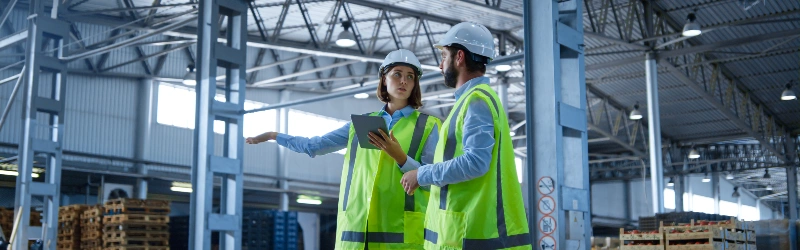
As a matter of preference, most employees desire to work in a fresh, clean and well-functioning workplace.
A cluttered and filthy work area undoubtedly mirror the kind of attitude and mindset the workers, as well as the managers, have in giving importance to their jobs.
On the other hand, a clean and tidy environment reflects how the employees (and supervisors) care about their jobs and work hard with due concern and consideration. Therefore, these people are more inclined to do their jobs better and are more productive compared to those who work in a messy and disorganized work areas.
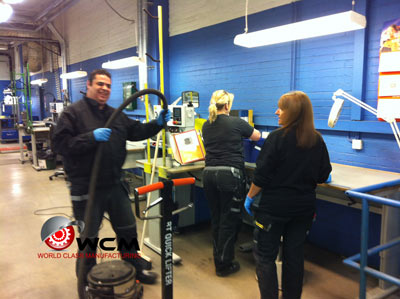
However, there are companies who refuse to acknowledge their part in keeping the workplace more people-friendly and instead put the blame on the perceived laziness of employees when it comes to housekeeping.
Well, I have gathered different views on housekeeping based on my experience as a 5S System coach.
Whenever I conduct 5S System trainings, I meet employees from all kinds of businesses. I would always pose a rhetorical question: "What would change if your workplace would be clean and in good order?"
The answers vary but what surprised me is that everyone shares a common desire: to have a clean and orderly work atmosphere.
It would save a lot of time, a staff commented.
I would be less irritated at work, said one.
According to another staff: I think we would be prouder about our workplace.
These are some typical comments coming from ordinary employees - and to my mind, it is clear that almost everyone wants the work facilities to be in good tip-top shape.
One explanation to this contradiction is: it is acceptable for most people to take care of their own trash, but few people like to take care of somebody else's waste.
A shift worker would certainly not be pleased if, one day, he would find his workplace dirty and all messed up. The first time it happens, he might clean it up. The second time, probably he'll ignore the mess and clean it up again anyway-but the next time he will not be that generous to lift a finger. Soon he will stop playing hero and say: It seems like no one else cares about this place, so why should I?
This means that the overall level of "housekeeping consciousness" will gradually deteriorate. If we do nothing, we will end up in a situation where the least interested employee will implicitly impose a poor sense of housekeeping standard for everybody else.
The way I see it, a cluttered and dirty workplace is not a worker's choice; it is a result of a bad system where a few lazy people can tear down the very fabric of industry convenience and labor satisfaction for all the rest.
This is, of course, unacceptable.
The more disorganized and unkempt the company is, the more reason why we need discipline, policies, rules and systems to maintain consistent standards of quality and safety free from wastes, errors, defects and accidents.
With these scenarios, this is where the "5S" approach can be implemented and put into system.
By Oskar Olofsson, author of the book "Succeeding with 5S"
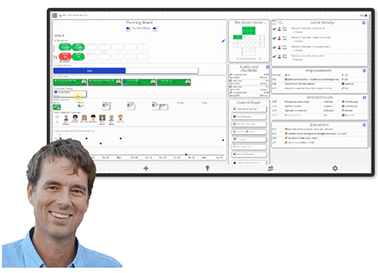
Enhance your 5S implementation and sustenance with our intuitive new app. It offers:
The app is developed by Oskar Olofsson, a renowned Lean expert and acclaimed author of "Succeeding with 5S". Harness the power of Lean management at your fingertips!

Making lean work for you

World-Class / Lean Manufacturing

5S Implementation

SMED Quick Change-over

TPM and Plant Maintenance
Succeeding With Standardized Work

Succeeding With 5S