
"Five S" is a method to create a safer, cleaner, and better-organized workplace, using five Japanese words:
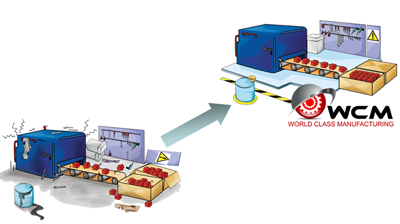
This article is a basic introduction and overview for each of these steps, which should be followed in sequence. Later articles cover each stage in more depth.
It is possible to start a program in just one department or area. This allows management to fine-tune the approach and adapt it to the specific workplace.
Running a pilot project also permits a group of employees to learn what to do and how to do it. For example, suppose a factory has a centralized team for equipment maintenance, but separate workers for various processes. The maintenance team will be involved everywhere. They might be overwhelmed by an initial factory-wide project, but do well in one area at a time. Also, once they learn from the pilot project, they will bring their new expertise to each new area.
Seiri means "to sort" or organize. It is the first stage of the method.
Sorting is a team activity. Production and maintenance workers should carry this out together.
The goals of Seiri are:
The basic tool is a red tag: tag the item, allow a month for someone to make a case for keeping that item; and discard the item after that month.
The additional tool is the Sort List: a log to follow up every red tag.
Remove unnecessary objects
This phase should identify and eliminate things like a bin of parts that were rejected and will never be reworked; broken or "custom" tools – anything jerry-rigged from string and duct tape; obsolete spare parts, inventory, and even documentation or binders.
If you don't need it: sell it or scrap it. If you need it but it is broken or hazardous: fix it properly.
Reduce waste
This identifies the hindrances, and goes beyond simple "waste material":
The principle here is to keep things in their proper places. One guide to proper placement is to keep frequently-used items handy, and store other things where they can be found.
On a personal level, you might carry a pen in your pocket because you jot notes all day. You keep your winter coat in a closet at home during the summer. Another example is how you should arrange your kitchen. You probably have cutlery sorted in one convenient drawer; the frequently-used pots and pans handy; but the once-a-year fondue set is tucked out of the way.
Seiton uses the same concept, expressed for a workplace:
The only exception to "store rarely-used items" would be for safety gear. Hopefully you rarely need a fire extinguisher or eye-wash station – but when you need it, it should be handy.
The Seiton article has more details on how to progress from identifying, through planning and implementing the "Set in Order" process.
This is the exception – the only one-time activity in the Five S method.
This stage has two goals:
Several questions help this stage to be more than just "polish until it shines for inspection":
This is also a team exercise. Clean and inspect one area at a time: equipment; work stations; and common areas. Take notes to guide future work. Finally, take photos of the "shiny clean" workplace to illustrate the new standard.
This phase draws on the notes from the Seiso stage. Consider the sources of dirt: air-borne dust; sawdust or other dry powder from cutting operations; splatter from wet processes; or simple trash because there is no proper container.
The results include:
A practical target is to have all workers take five minutes every day to tidy up after themselves – including the time to complete and sign the checklists. By dividing the work among all the employees:
Supervisors should monitor compliance with Seiketsu. The checklists make this both important and achievable.
Shitsuke is a complex Japanese concept that includes instilled discipline, self-discipline, common cultural values, and self-motivated practice to improve. A Westerner might think of: parents training their children to brush their teeth after each meal; children then brushing regularly; expecting everyone to brush after meals; and (for a non-dental example) golfers continuing to practice putting, even though the stroke may seem easy to a beginner.
This step requires continued management support and communication.
Audit and certification programs should be introduced to follow-up once the whole factory has undergone the implementation program.
By Oskar Olofsson, author of the book "Succeeding with 5S"
Enhance your 5S implementation and sustenance with our intuitive new app. It offers:
The app is developed by Oskar Olofsson, a renowned Lean expert and acclaimed author of "Succeeding with 5S". Harness the power of Lean management at your fingertips!


Succeeding With Lean Leadership

Succeeding With 5S

Succeeding With Standardized Work